The Whispering Forest
Transcribed from oral telling
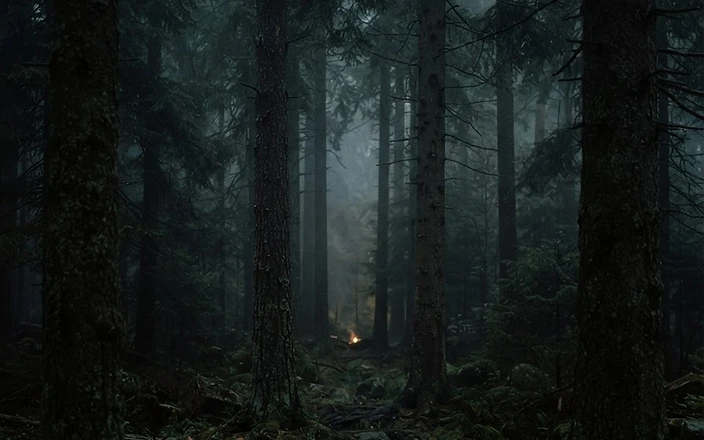
n the oldest versions of the tale, the forest does not whisper with words. It whispers with weather — a sudden stillness in the air, the smell of rain that has not yet fallen, the way light bends wrong around the trunks. The hunter's grandmother had told him this, and her grandmother before her, back through so many winters that the telling itself had become a kind of tree.
He had gone in at dawn, following tracks that were not quite deer. By midday the sun had moved without him, hanging in a part of the sky it had no right to occupy. He understood then that he was being measured. Something in the green dark was taking the weight of him — his years, his hungers, the small cruelties he had done and the larger ones he had only thought.
The Leshy does not appear. It is the appearance. A leaning of branches that becomes a shoulder, a gap in the canopy that opens like a mouth. It offered him passage home in exchange for his shadow, which it called 'the part of you that falls behind.' He agreed, because the bargain felt fair, and because he was afraid, and because fear makes fairness of anything.
He walked out of the wood before sunset. His wife saw him come up the path and did not recognize him, though she could not say why. He ate at the table. He slept in the bed. But on the wall, where his shadow should have fallen in the lamplight, there was only the grain of the wood, undisturbed. And in the forest, something wore his shadow like a coat, and walked the paths he would never walk again, and was almost, but not quite, him.